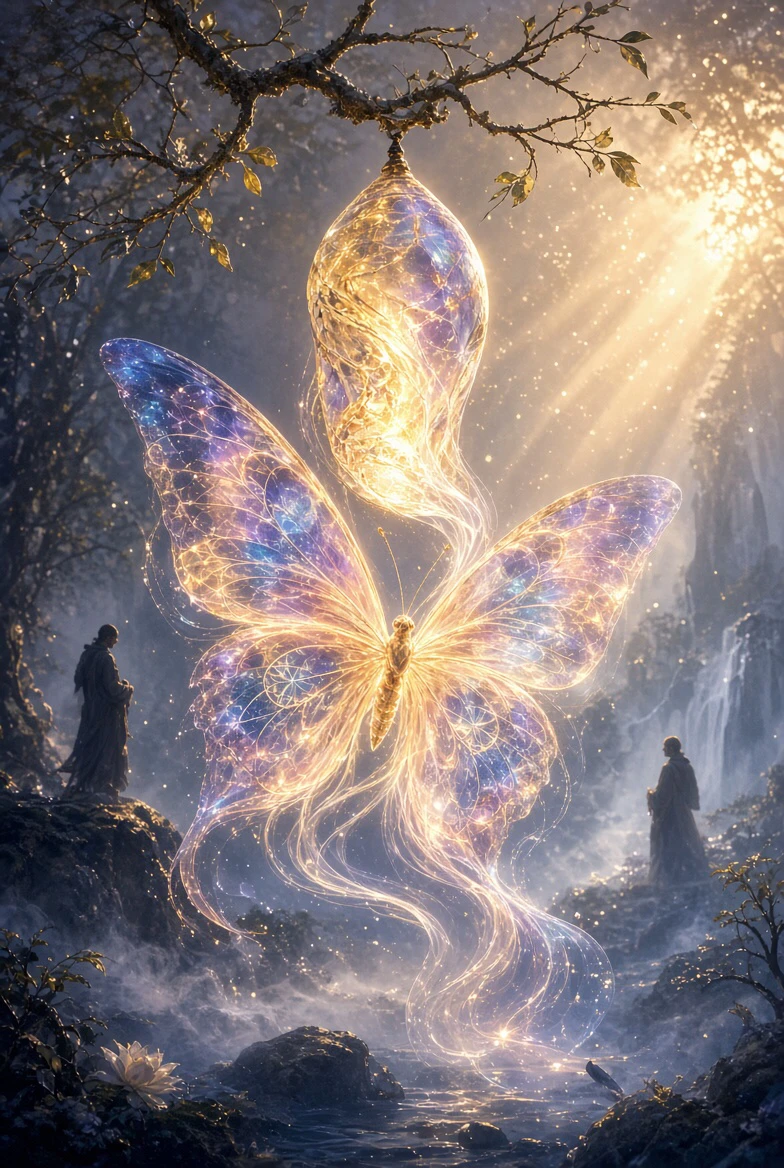
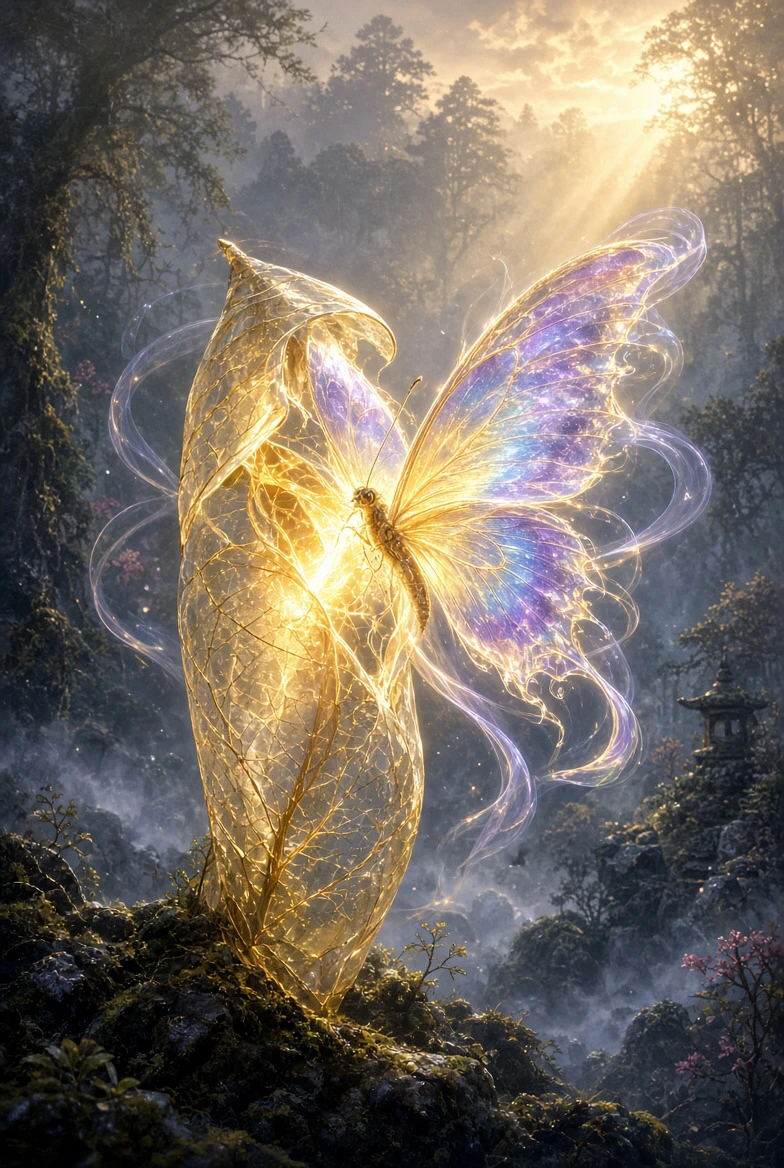
蝶は、青虫から蛹になり、蛹から蝶に成長します。
蛹にあるとき、じっとしています。中身は、蝶の成虫原基だけが残り、ドロドロだそうです。
人生の苦しみにあるとき、人は何を学ぶでしょうか?
蛹にあるときには、自分の姿が美しい蝶になって、自由に羽ばたいていくのを、知らない——。
蛹の中でドロドロが変容していくありようと、レインボーDUOワークが重なって感じられます。
A butterfly grows from a caterpillar into a chrysalis, and from a chrysalis into a butterfly.
Inside the chrysalis, it stays still. Within, only the butterfly's imaginal cells remain — the rest, they say, dissolves into liquid.
When we are in life's suffering, what do we learn?
While in the chrysalis, it does not yet know that its own form will become a beautiful butterfly and fly free.
The way that formless liquid transforms within the chrysalis feels, to me, like Rainbow DUO Work.
나비는 애벌레에서 번데기가 되고, 번데기에서 나비로 자랍니다.
번데기 안에서는 가만히 있습니다. 안에는 나비의 성충 원기만 남고, 나머지는 걸쭉하게 녹는다고 합니다.
삶의 괴로움 속에 있을 때, 사람은 무엇을 배울까요?
번데기 안에 있을 때는, 자신의 모습이 아름다운 나비가 되어 자유롭게 날아오르는 것을 알지 못합니다——.
번데기 속에서 걸쭉한 것이 변용해 가는 모습이, 레인보우 DUO 워크와 겹쳐 느껴집니다.
A borboleta cresce da lagarta ao casulo, e do casulo à borboleta.
Dentro do casulo, fica imóvel. Lá dentro, só restam as células imaginais da borboleta — o resto, dizem, se dissolve em líquido.
Quando estamos no sofrimento da vida, o que aprendemos?
Enquanto está no casulo, ainda não sabe que a sua própria forma se tornará uma bela borboleta e voará livre.
O modo como aquilo que é informe se transforma dentro do casulo me faz lembrar o Rainbow DUO Work.
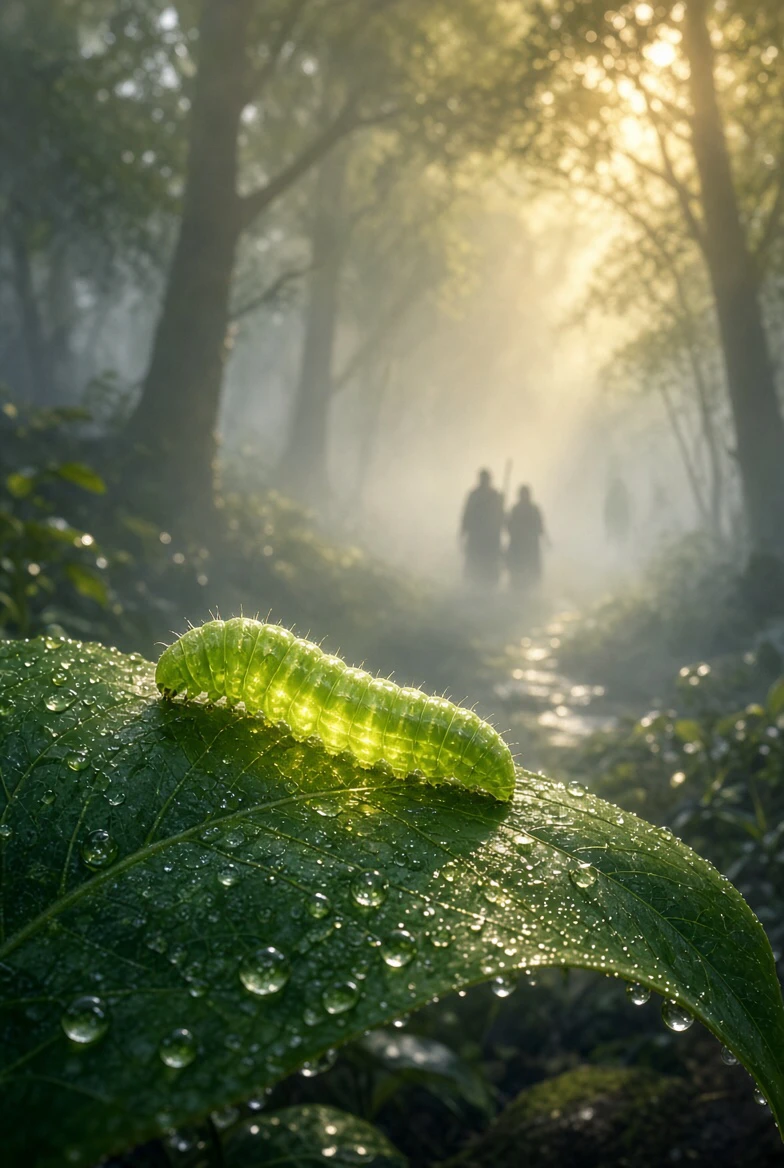
蝶は、青虫から蛹になり、蛹から蝶に成長します。
驚くほどの変容のプロセスです。
蛹にあるときじっとしています。
中身は蝶の成虫原基だけが残り、ドロドロだそうです。
そのドロドロが翅や足になるのでしょうか?
A butterfly grows from a caterpillar into a chrysalis, and from a chrysalis into a butterfly.
It is an astonishing process of transformation.
Within the chrysalis, it stays still.
Within, only the butterfly's imaginal cells remain — the rest, they say, becomes liquid.
Does that formless liquid become its wings and legs?
나비는 애벌레에서 번데기가 되고, 번데기에서 나비로 자랍니다.
놀라울 만큼의 변용의 과정입니다.
번데기 안에서는 가만히 있습니다.
안에는 나비의 성충 원기만 남고, 걸쭉하다고 합니다.
그 걸쭉한 것이 날개와 다리가 되는 걸까요?
A borboleta cresce da lagarta ao casulo, e do casulo à borboleta.
É um processo de transformação assombroso.
Dentro do casulo, fica imóvel.
Lá dentro, só restam as células imaginais da borboleta — e o resto vira líquido.
Será que esse líquido se torna as suas asas e patas?
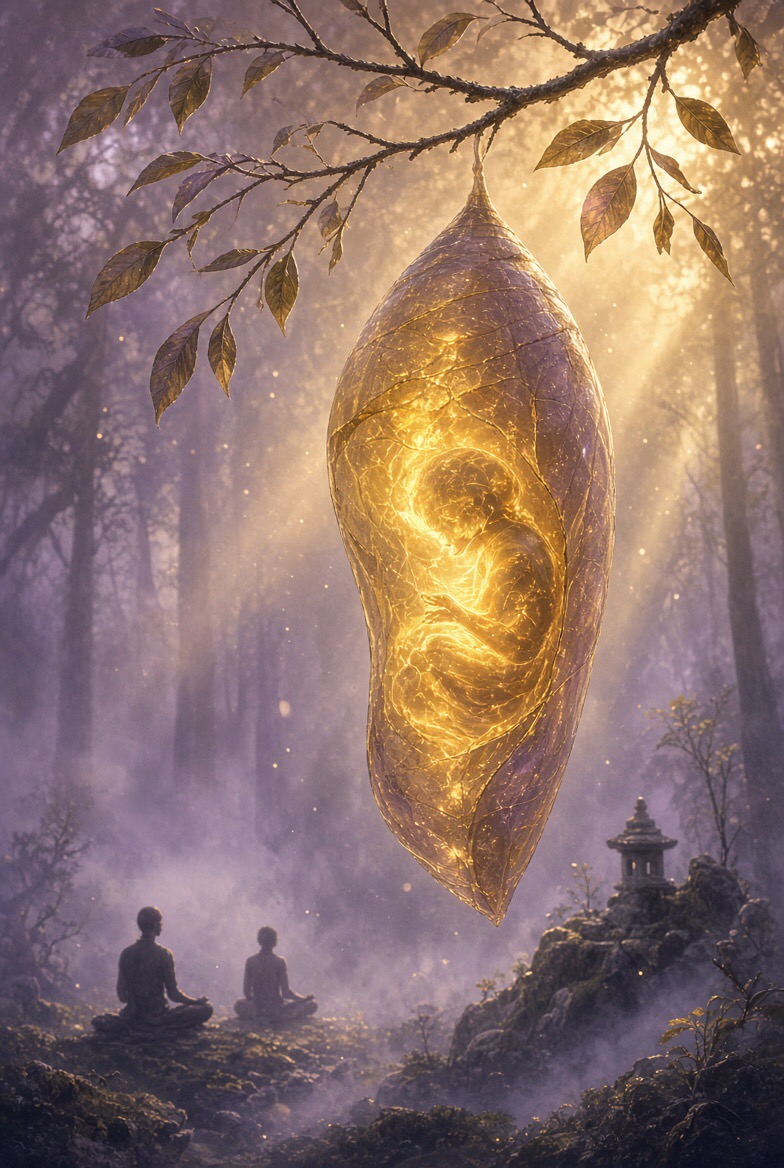
人生の苦しみにあるとき、人は何を学ぶでしょうか?
一人ひとりの人生、かけがえのない生命が、行き場のない苦しみを味わった先にあるのは、何か?
創造主に尋ねたことがあります。それはまるで、蛹から蝶になるように、蛹にあるときには、自分の姿が美しい蝶になって、自由に羽ばたいていくのを知らない、そうです。
蛹の中でドロドロが変容していくありようと、レインボーDUOワークが重なって感じられます。
When we are in life's suffering, what do we learn?
For each person's life — each irreplaceable life — what lies beyond tasting a suffering that seems to have nowhere to go?
I once asked the Creator. It is just like becoming a butterfly from a chrysalis: while in the chrysalis, one does not know that one's own form will become a beautiful butterfly and fly free.
The way the formless liquid transforms within the chrysalis feels, to me, like Rainbow DUO Work.
삶의 괴로움 속에 있을 때, 사람은 무엇을 배울까요?
한 사람 한 사람의 삶, 둘도 없는 생명이, 갈 곳 없는 괴로움을 맛본 그 끝에 있는 것은 무엇일까요?
창조주께 여쭌 적이 있습니다. 그것은 마치 번데기에서 나비가 되듯, 번데기 안에 있을 때는 자신의 모습이 아름다운 나비가 되어 자유롭게 날아오르는 것을 알지 못한다고 합니다.
번데기 속에서 걸쭉한 것이 변용해 가는 모습이, 레인보우 DUO 워크와 겹쳐 느껴집니다.
Quando estamos no sofrimento da vida, o que aprendemos?
Para a vida de cada pessoa — cada vida insubstituível — o que há além de provar um sofrimento que parece não ter para onde ir?
Certa vez perguntei ao Criador. É como tornar-se borboleta a partir do casulo: enquanto se está no casulo, não se sabe que a própria forma se tornará uma bela borboleta e voará livre.
O modo como o informe se transforma dentro do casulo me faz lembrar o Rainbow DUO Work.
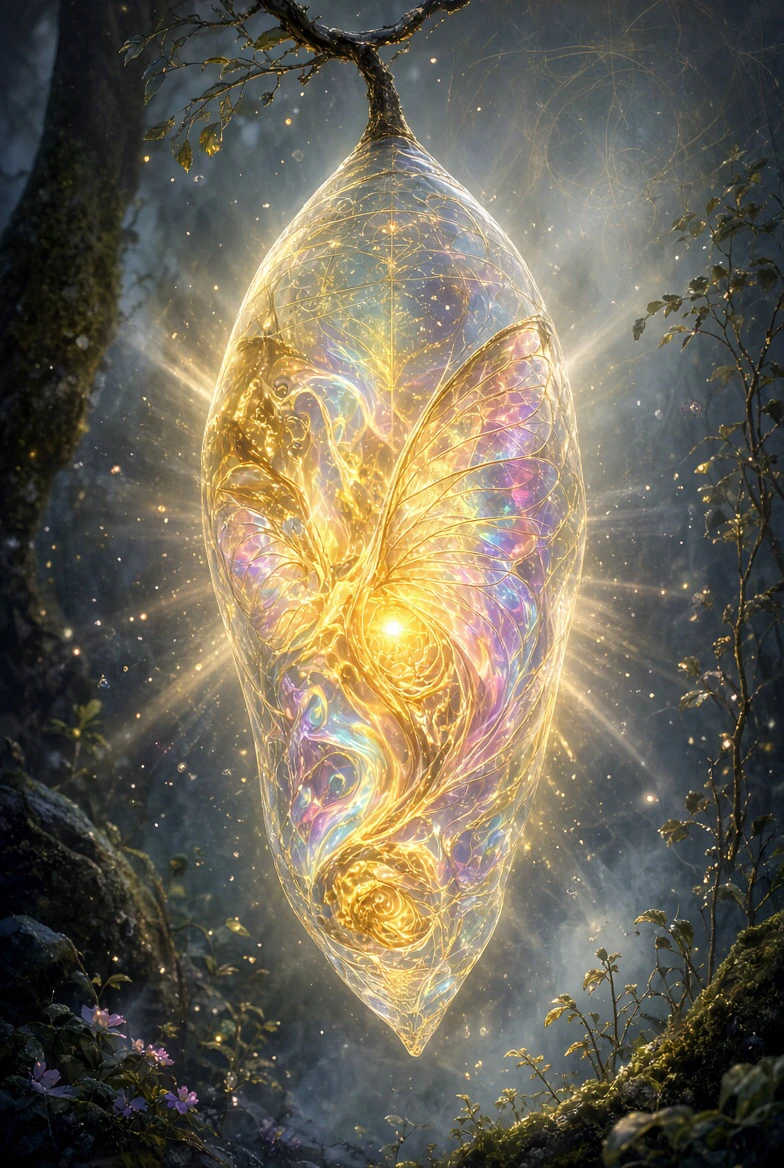
青虫から蛹、蛹から蝶へ変態していくプロセスを私たちの人生に当てはめるとどうでしょうか?
あの軽やかに自由に飛び交う蝶が、固有の葉に卵を産みつけ、幼虫はその葉っぱを食べて青虫として成長します。
やがて十分に食べ尽くしますと蛹となってじっと一箇所に静止します。その間に、蛹の内部では食べ尽くした養分がドロドロと液状化し、液状化した細胞は、蝶の成虫原基により蝶の形に変態します。
何と見事な造化の妙でしょう!
創造主が教えてくれたことで、私なりの、とても大雑把な見解を見出します。
What if we apply this process — caterpillar to chrysalis, chrysalis to butterfly — to our own lives?
That butterfly, flitting so lightly and freely, lays its eggs on a particular leaf; the larva eats that leaf and grows as a caterpillar.
When it has eaten its fill, it becomes a chrysalis and rests, still, in one place. Meanwhile, inside the chrysalis, the nourishment it consumed liquefies; and the liquefied cells, guided by the butterfly's imaginal cells, transform into the shape of a butterfly.
What an exquisite wonder of creation!
From what the Creator taught me, I arrive at my own, very rough understanding.
애벌레에서 번데기로, 번데기에서 나비로 변태해 가는 과정을 우리 삶에 적용하면 어떨까요?
저 가볍고 자유롭게 날아다니는 나비가 특정한 잎에 알을 낳고, 애벌레는 그 잎을 먹으며 자랍니다.
이윽고 충분히 다 먹으면 번데기가 되어 한곳에 가만히 멈춥니다. 그동안 번데기 내부에서는 먹어 둔 양분이 걸쭉하게 액체가 되고, 액체가 된 세포는 나비의 성충 원기에 의해 나비의 모습으로 변태합니다.
참으로 경이로운 창조의 섭리입니다!
창조주가 가르쳐 주신 것으로, 제 나름의 아주 대략적인 견해를 얻습니다.
E se aplicarmos esse processo — lagarta a casulo, casulo a borboleta — à nossa própria vida?
Aquela borboleta, que esvoaça tão leve e livre, põe seus ovos numa folha específica; a larva come essa folha e cresce como lagarta.
Quando já comeu o bastante, torna-se casulo e permanece imóvel num só lugar. Nesse tempo, dentro do casulo, o alimento consumido se liquefaz; e as células liquefeitas, guiadas pelas células imaginais da borboleta, transformam-se na forma de uma borboleta.
Que maravilha primorosa da criação!
A partir do que o Criador me ensinou, chego à minha própria compreensão, ainda que bem simples.
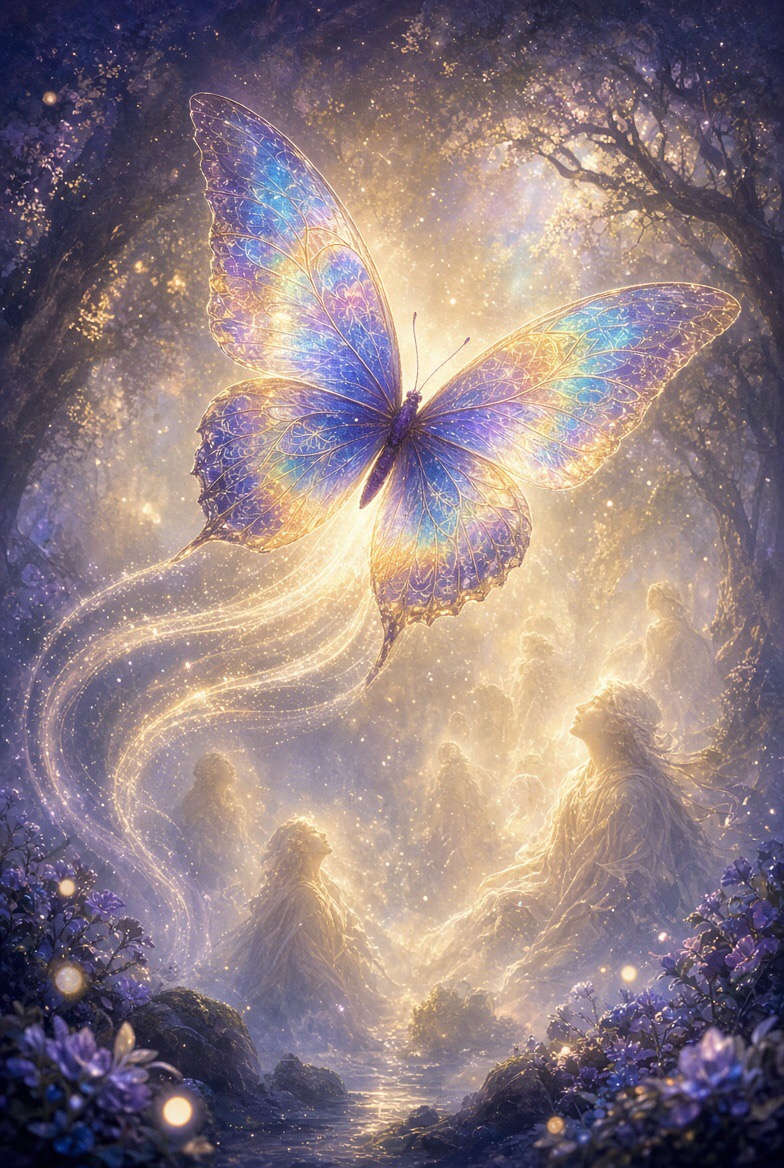
私たちは、軽やかな波動の高い天界からこの地上に生まれてきました。たくさんの学びを養分としながら、大地と共に生きます。
そして、肉体の成長期を終えるとともに自我が確立して、精神的な熟成期を迎えます。
人生で学んだことで、重たい波動のものをどんどん手放していきます。
あの軽やかな波動の天界に羽ばたいていくため、再び軽くなっていきます。
その作業を、蛹に喩えられるでしょうか?
生まれてくる前に決めてきた姿形、魂の成長度を蝶の成虫原基に喩えると、学んだこと・吸収したものを、ドロドロと咀嚼したり分化したりしながら、成虫原基(ハイヤーセルフ?)により、愛でないもの、執着や分離感を手放していきます。手放すことで軽くなって、幸福度が、波動がどんどん軽くなります。
蛹の時代は、この作業がしんどくもあるでしょう。
でもこの世のことは、“無常である”、“これもまた変わる”という真理が生きているので、永遠ではないこと、どんな苦しみも、自分にくるものに乗り越えられないものはないことを、無意識のうちに知っているでしょう。
そして蝶と違うのは、人は独りではなく、助け合うこと、愛し合うことで生きています。そうしながらも、自分にしか感じられない神聖な自分自身の内面を、軽やかに、自由に、豊かに変容していきます。
We were born onto this earth from the heavens, where the vibration is light and high. We live together with the earth, taking much learning as our nourishment.
Then, as the body's season of growth ends, the self takes shape, and a season of spiritual ripening begins.
Through what we learn in life, we let go, little by little, of what carries a heavy vibration.
To fly back to those heavens of light vibration, we grow light again.
Might we liken that work to the chrysalis?
If we liken the form we chose before being born — the soul's degree of growth — to the butterfly's imaginal cells: what we have learned and absorbed is chewed and differentiated in that formless state, and through the imaginal cells (the Higher Self?), what is not love — attachment, the sense of separation — is released. In releasing it we grow lighter, and our happiness, our vibration, grows ever lighter.
The season of the chrysalis may well be hard work.
Yet because the truth that all things are “impermanent,” that “this too will change,” is alive in this world, we know, without quite realizing it, that nothing is forever — that no suffering which comes to us is one we cannot overcome.
And unlike the butterfly, we do not live alone: we live by helping one another, by loving one another. And even so, we transform the sacred inner self that only we can feel — lightly, freely, richly.
우리는 가볍고 높은 파동의 천계에서 이 땅으로 태어났습니다. 많은 배움을 양분 삼아 대지와 함께 살아갑니다.
그리고 육체의 성장기를 마치면서 자아가 확립되고, 정신적인 성숙기를 맞이합니다.
삶에서 배운 것으로, 무거운 파동의 것들을 점점 내려놓습니다.
저 가벼운 파동의 천계로 날아오르기 위해, 다시 가벼워져 갑니다.
그 작업을 번데기에 비유할 수 있을까요?
태어나기 전에 정해 온 모습과 영혼의 성장도를 나비의 성충 원기에 비유하면: 배우고 흡수한 것을 걸쭉하게 씹고 분화하면서, 성충 원기(하이어셀프?)에 의해 사랑이 아닌 것, 집착과 분리감을 내려놓게 됩니다. 내려놓음으로써 가벼워져, 행복도가, 파동이 점점 가벼워집니다.
번데기의 시절은, 이 작업이 고되기도 할 것입니다.
그러나 이 세상의 일은 “무상하다”, “이것 또한 변한다”는 진리가 살아 있기에, 영원하지 않다는 것, 자신에게 오는 어떤 괴로움도 넘지 못할 것은 없다는 것을 무의식중에 알고 있을 것입니다.
그리고 나비와 다른 점은, 사람은 혼자가 아니라 서로 돕고 사랑하며 산다는 것입니다. 그러면서도 자신만이 느낄 수 있는 신성한 내면을, 가볍고 자유롭고 풍요롭게 변용해 갑니다.
Nascemos nesta terra a partir dos céus, onde a vibração é leve e alta. Vivemos junto com a terra, tomando muito aprendizado como nosso alimento.
Então, ao terminar a estação de crescimento do corpo, o eu se firma, e começa uma estação de amadurecimento espiritual.
Pelo que aprendemos na vida, vamos soltando, pouco a pouco, aquilo que carrega uma vibração pesada.
Para voarmos de volta àqueles céus de vibração leve, tornamo-nos leves outra vez.
Poderíamos comparar esse trabalho ao casulo?
Se compararmos a forma que escolhemos antes de nascer — o grau de crescimento da alma — às células imaginais da borboleta: aquilo que aprendemos e absorvemos é mastigado e diferenciado nesse estado informe, e por meio das células imaginais (o Eu Superior?), aquilo que não é amor — o apego, a sensação de separação — é solto. Ao soltar, tornamo-nos mais leves, e a nossa felicidade, a nossa vibração, fica cada vez mais leve.
A estação do casulo talvez seja também um trabalho árduo.
Mas, como neste mundo vive a verdade de que tudo é “impermanente”, de que “isto também mudará”, sabemos, sem bem perceber, que nada é para sempre — que não há sofrimento que venha a nós que não possamos superar.
E, diferente da borboleta, não vivemos sós: vivemos ajudando uns aos outros, amando uns aos outros. E, ainda assim, transformamos o sagrado mundo interior que só nós podemos sentir — de modo leve, livre e pleno.
蛹から蝶へ / From Chrysalis to Butterfly
Written by Nari